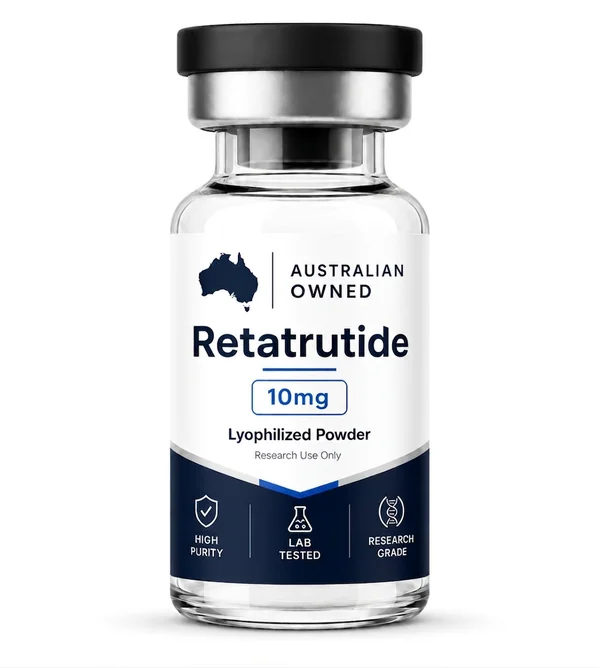

A comprehensive standard operating procedure for Australian researchers handling blue peptide — covering delivery verification, reconstitution practices, analytical reviews, and stable storage.
When sourcing blue peptide across Australia, laboratory researchers require absolute certainty regarding molecular integrity, chain of custody, and verifiable analytical testing. Rather than relying on unverified claims, scientific teams evaluate potential partners through clear benchmarks: verified purity spectra, domestic dispatch times, batch-specific reporting, and responsive local assistance. Klow Peptide provides this benchmark for life-science facilities nationwide.
To guarantee reproducible experimental outcomes, every shipment of blue peptide must be handled according to a disciplined benchtop process. The following operational guideline maps out each sequential phase—intake, assay verification, dilution, maintenance, and protocol termination—highlighting the exact risk factors addressed at each step.
Phase 1: Receiving & Physical Inspection
- Retrieve shipments promptly upon delivery; prevent unattended exposure to high Australian ambient temperatures.
- Cross-check the outer packaging identifier with your Klow Peptide shipping confirmation email.
- Examine the freeze-dried blue peptide puck through the borosilicate glass for structural uniformity, looking for any signs of collapse or discoloration.
- Archive a digital snapshot containing the vial label, carton, and documentation for internal tracking.
Phase 2: Verifying Documentation & Identity Assays
Prior to moving blue peptide into low-temperature storage, staff should confirm all analytical records. Spending a minute validating paperwork mitigates the threat of undetected lot variability.
- Confirm identical lot coding across the primary vial, external box, and analytical certificate for blue peptide.
- Verify that the reversed-phase HPLC spectrum displays a purity rating of 98% or greater.
- Examine mass spectrometry figures to ensure observed molecular weight aligns precisely with theoretical parameters for blue peptide.
- File the batch certificate within your laboratory information management system tied to this specific reagent identifier.
Review Certificate of Analysis Records
Check published analytical reports and inspect verified lot documentation before initiating your protocol.
Phase 3: Precise Reconstitution SOP for Blue Peptide
| Stage | Procedure | Analytical Risk Controlled |
|---|---|---|
| 1 | Equilibrate vial and bacteriostatic diluent to room temperature | Prevents cold-induced structural shock to lyophilized matrix |
| 2 | Sanitise rubber septa with isopropyl prep pads | Stops external microbial contamination during needle entry |
| 3 | Introduce diluent steadily along inner vial perimeter | Eliminates excessive agitation, foaming, and peptide denaturation |
| 4 | Gently rotate the glass vial without shaking | Prevents shear stress and physical degradation of peptide chains |
| 5 | Record preparation date and active concentration on the vial | Avoids dosing ambiguity in subsequent experimental stages |
| 6 | Transfer to chilled storage maintained between 2°C and 8°C | Prevents accelerated degradation outside regulated thermal bounds |
Order Research-Grade Blue Peptide
High-purity blue peptide tested by HPLC and held locally in Australia, shipped via tracked Express Post for rapid delivery.
Phase 4: Post-Reconstitution Preservation Guidelines
- Store reconstituted solutions strictly at 2–8°C in bacteriostatic media directly following dissolution.
- Complete testing cycles within documented stability parameters—ordinarily 28 to 42 days for this biochemical profile.
- Divide reconstituted stock into separate micro-vials immediately if investigations extend across several weeks, limiting repeated septa punctures.
- Shield blue peptide preparations from direct fluorescent exposure and thermal instability.
Phase 5: Exhaustion & Reagent Disposal Logging
Once the blue peptide sample is fully utilised, log remaining waste volumes and disposal methodology directly against the lot record. Completing this documentation guarantees audit trail completeness and streamlines continuity for subsequent batch acquisitions.
Phase 6: Reordering Protocols and Supply Continuity
Procuring replacement blue peptide through Klow Peptide guarantees supply consistency—Australian domestic dispatch, lot-matched analysis, and rapid fulfillment. Should future experimental milestones require modified volume formats, consult our support staff ahead of checkout so logistical arrangements match project timelines.
Connect With Our Australian Support Desk
Need technical clarification on lot tracking, delivery, or volume requests? Our local laboratory service specialists are on standby.
Frequently Asked Workflow Questions
Is ambient storage acceptable for lyophilized blue peptide?
Short-term ambient conditions during Australian parcel transit are fully safe for lyophilized material. However, prolonged archive storage for blue peptide should remain at -20°C in its sealed vial.
What is the working lifespan of blue peptide once mixed?
Stored between 2°C and 8°C using bacteriostatic water, blue peptide normally retains stability for 28 to 42 days depending on protocol specifics and analytical parameters.
What protocol applies if a blue peptide delivery arrives warm?
Take photos of packaging components and alert our support desk within 24 hours. Klow Peptide provides immediate replacement whenever uncharacteristic courier transit temperatures threaten sample viability.
Should reconstituted blue peptide solutions be placed in the freezer?
Re-freezing liquid preparations can trigger structural harm via ice crystallization. Dividing into single-use aliquots at initial reconstitution is the recommended protocol.
What is the proper method for logging an active blue peptide vial?
Document original reconstitution timing, solvent concentration, incremental volume draws, and corresponding lot numbers. This facilitates full traceability back to the analytical certificate.
Where can our facility review current blue peptide testing certificates?
Comprehensive analytical reports are published openly on our Lab Results page. Furthermore, an individual physical certificate ships directly with every Klow Peptide order.
Secure Verified Blue Peptide Today
Domestic stock, stringent chromatographic validation, and fast Australian shipping with full tracking available on every parcel.