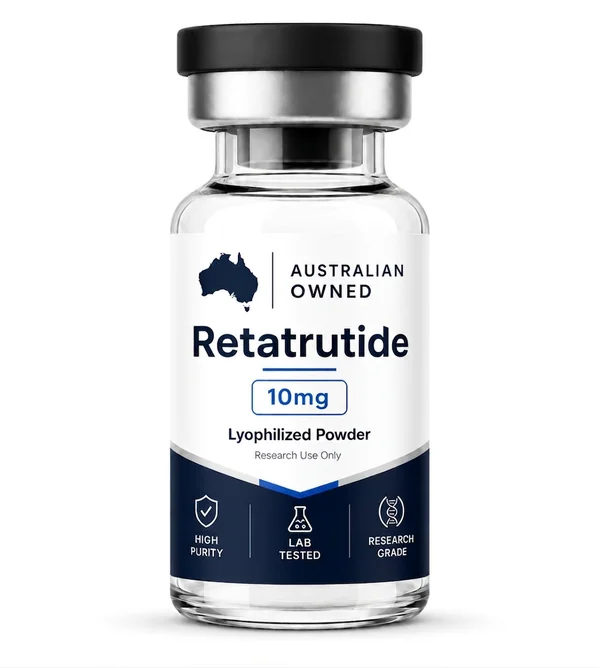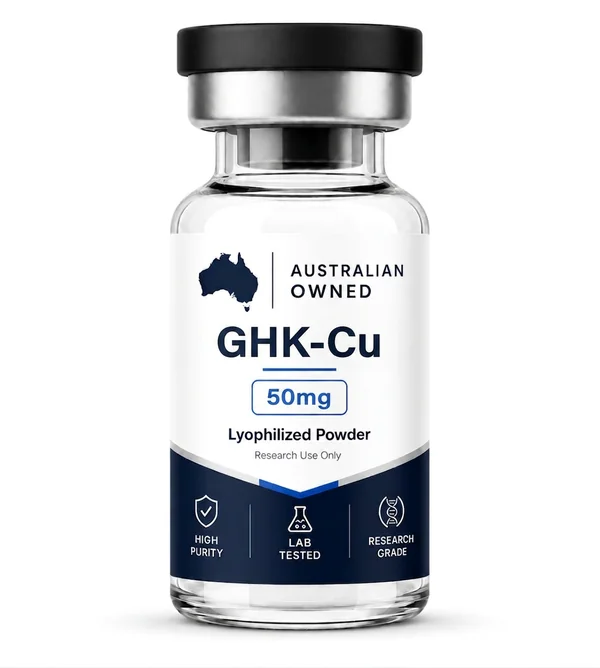

An exhaustive operational handbook for Australian laboratories seeking to buy peptides in Australia—covering domestic supply chains, analytical validation, reconstitution protocols, and sample management.
When investigators look to buy peptides in Australia, precision sourcing and rapid domestic transport are critical considerations. Research facilities, university laboratories, and biotechnology groups require verified analytical documentation, consistent stability, and local inventory holding. This operational reference breaks down how compliant domestic supply lines function, what analytical records must accompany each compound, and how Klow Peptide maintains Australia's premier catalogue of laboratory-grade research reagents.
To guarantee reproducible research outcomes, scientific teams should establish an end-to-end operational protocol when they buy peptides in Australia: initial receipt → analytical cross-referencing → clean reconstitution → cold-chain holding → study run → lot retirement. Every step outlined below mitigates a specific point of experimental error.
Phase 1: Intake and Parcel Verification
- Collect packages promptly upon delivery to prevent excessive exposure to ambient Australian seasonal temperatures.
- Cross-reference the external packaging lot code with the digital dispatch manifest provided by your supplier.
- Examine the lyophilized plug through the clear borosilicate vial, confirming a solid, uniform freeze-dried cake free of melting or micro-crystallization.
- Capture a high-resolution intake photo containing the vial label, box barcode, and physical testing documentation for audit trails.
Phase 2: Independent Certificate Analysis & Quality Auditing
Prior to deep-freeze placement, complete a rapid analytical audit on any batch when you buy peptides in Australia. This brief verification protects your experimental models from silent batch-to-batch deviation.
- Confirm an exact three-way match across the vial label lot code, carton identifier, and corresponding Certificate of Analysis (COA).
- Ensure the published High-Performance Liquid Chromatography (HPLC) purity reads at or above 98.0%, verified by a clean visual chromatogram peak.
- Validate that the documented Mass Spectrometry (MS) reading matches the theoretical molecular mass of the target sequence.
- Register the digital COA into your institutional laboratory management database alongside the parent batch identifier.
Practical Tools for Australian Investigators
Utilize our reconstitution calculator, verify analytical records, and inspect published research criteria.
Phase 3: Standardised Reconstitution Methodology
| Step | Action | Failure Mode Prevented |
|---|---|---|
| 1 | Equilibrate vial and bacteriostatic water to ambient temperature | Thermal fracturing of the delicate lyophilized matrix |
| 2 | Sanitise both septum stoppers with isopropyl wipes | Bacterial introduction during needle penetration |
| 3 | Introduce diluent slowly along the inner glass perimeter | Violent foaming and secondary peptide denaturation |
| 4 | Gently roll the vial until dissolved; never shake | Shear-force structural degradation of the amino acid chain |
| 5 | Annotate label with preparation date, diluent volume, and final strength | Ambiguous working concentrations in subsequent trials |
| 6 | Store immediately within a 2–8°C laboratory refrigerator | Rapid chemical degradation outside regulated cold-chain conditions |
Source Research Peptides for Upcoming Projects
On-shore Australian warehouse inventory backed by strict three-way verification: vial, box, and analytical report.
Phase 4: Cold-Chain Maintenance of Reconstituted Solutions
- Keep prepared solutions held in bacteriostatic water strictly between 2°C and 8°C immediately following liquid introduction.
- Conclude experimental testing within the recognized post-reconstitution window—typically 28 to 42 days for most standard research sequences.
- Divide reconstituted stock into single-use aliquots at initial preparation if your investigation spans multiple weeks to avoid septum wear.
- Shield working liquid vials from light exposure and keep them clear of cyclical defrost zones inside cooling units.
Phase 5: Consumption Tracking and Lot Depletion Audits
When a research unit exhausts its usable volume, document the remaining trace disposal alongside the corresponding batch number in your audit log. Closing out the inventory cycle maintains clean compliance records and ensures seamless documentation continuity when ordering your next delivery.
Phase 6: Domestic Supply Replenishment
Re-ordering research compounds from Klow Peptide ensures unbroken analytical standards: Australian-held stock, independently validated lot certificates, and prompt domestic courier dispatch. Should future phases of your project demand altered synthesis formats, contact our team in advance to coordinate staged delivery schedules.
Connect with Klow Peptide Support
Our domestic team handles technical inquiries, analytical verification, distribution schedules, and bulk laboratory requests.
Frequently Asked Questions: Australian Peptide Procurement
Can dry research peptides remain at ambient temperatures prior to hydration?
Lyophilized powders withstand moderate ambient temperatures briefly during transit, but long-term laboratory preservation mandates storage at -20°C in factory-sealed containers.
What is the typical working lifespan of a peptide once reconstituted?
When hydrated with sterile bacteriostatic water and maintained at 2–8°C, typical peptide integrity remains stable for 28 to 42 days, governed by individual peptide characteristics and published stability data.
What protocol applies if an express parcel arrives hot to the touch?
Document package conditions upon arrival and reach out to Klow Peptide support within 24 hours. We arrange priority replacements whenever extreme environmental transit compromises sample integrity.
Is freezing appropriate for hydrated research peptides?
Repeated freeze-thaw cycles cause physical degradation to dissolved peptides. Aliquoting into single-use sterile micro-tubes at initial reconstitution before refrigeration is the preferred standard.
How should researchers record multi-week studies using single lots?
Log initial hydration dates, working volume, session pull amounts, and the master lot number into your laboratory information system, indexing all data directly to the official COA.
Where can current batch certificates of analysis be reviewed?
Up-to-date third-party analytical reports are posted publicly on our Lab Results portal, with corresponding verified physical documentation included inside every Klow Peptide shipment.
Secure Research Peptides Across Australia
Access premium domestic research inventory with verifiable batch traceability from vial to analytical report.