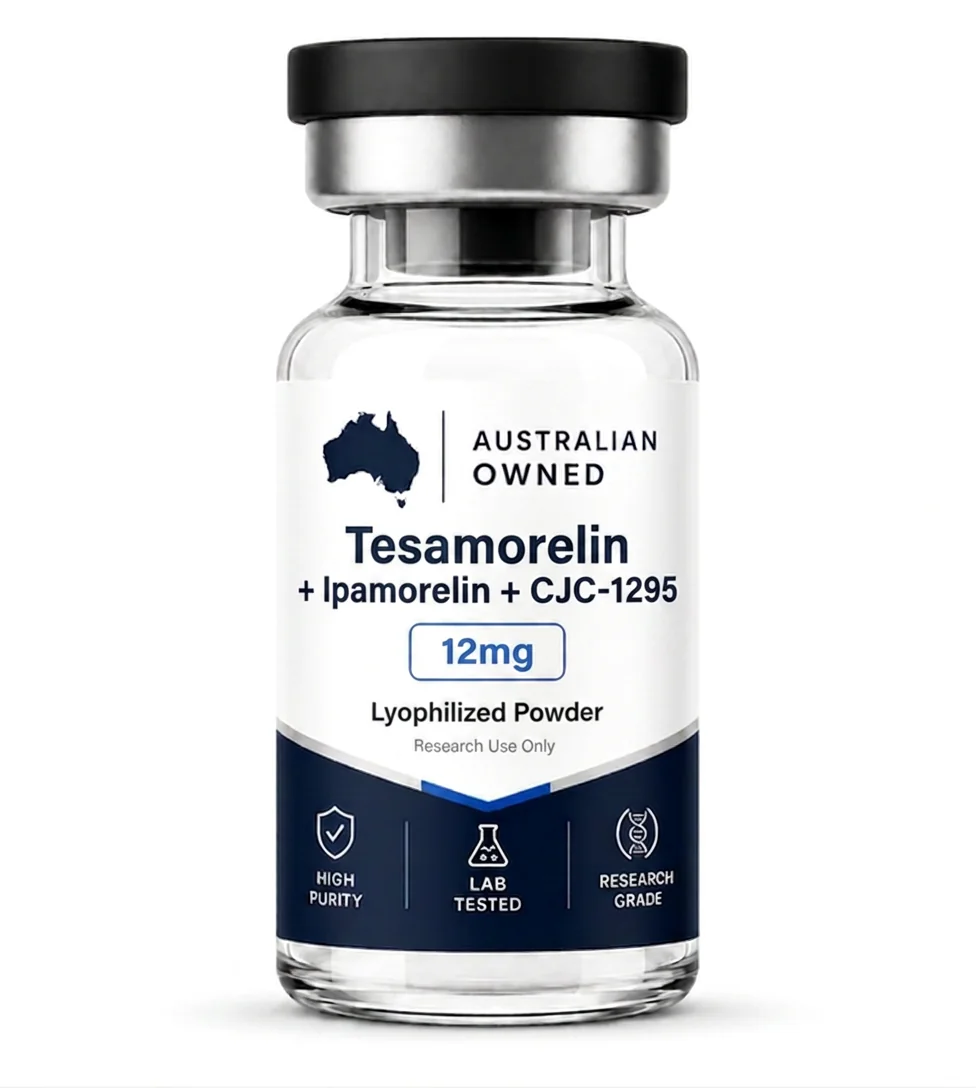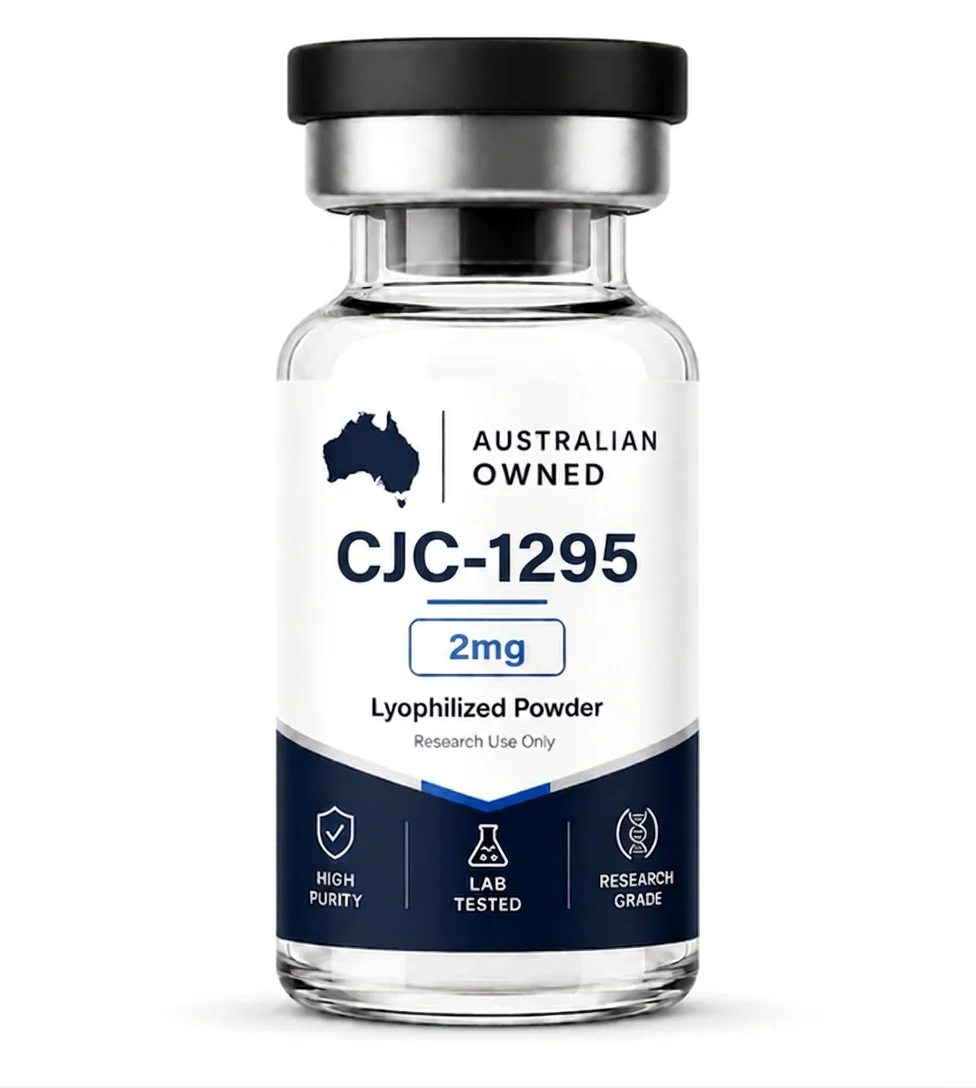
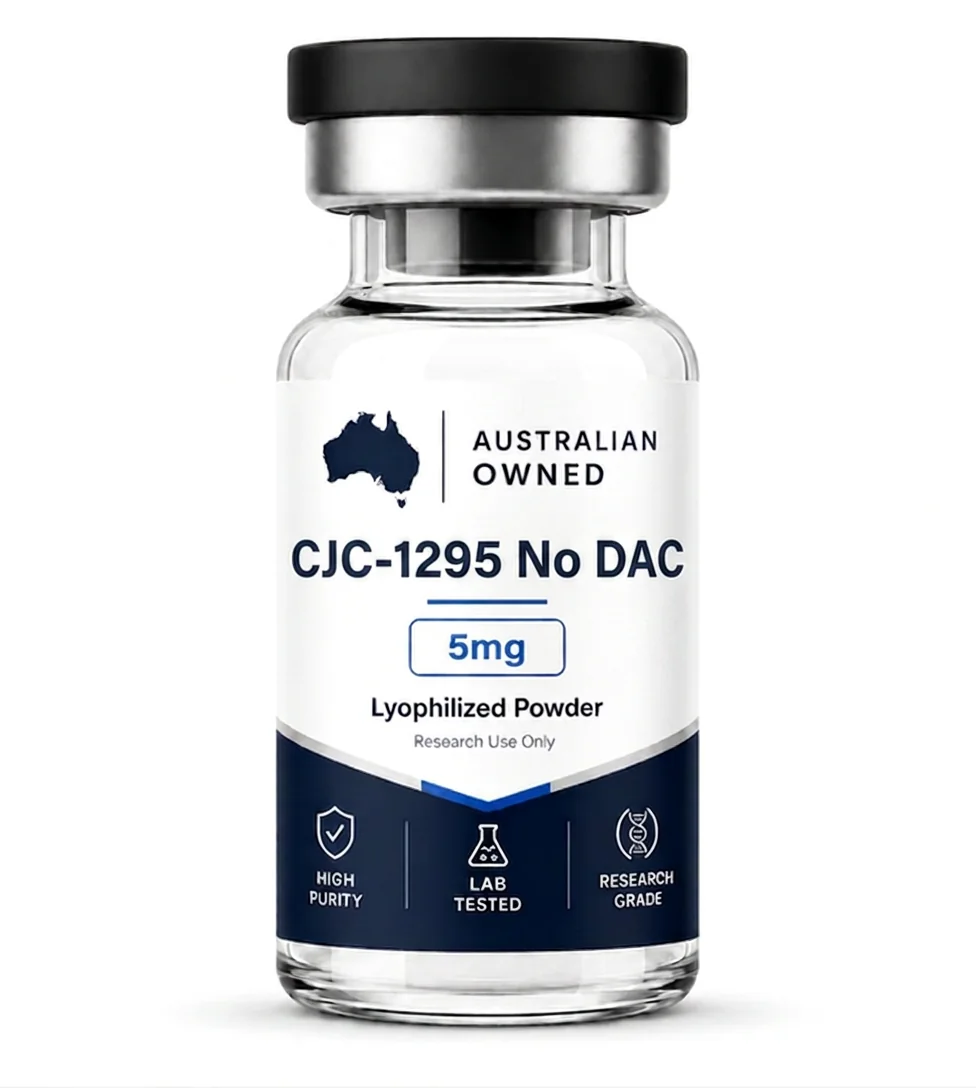
A comprehensive handling and protocol workflow for Australian researchers working with CJC-1295 No-DAC in laboratory environments.
Lacking the Drug Affinity Complex (DAC) reactive linker, CJC-1295 No-DAC functions as an unmodified growth hormone-releasing factor analog. Its characteristic rapid clearance mirrors endogenous pulsatile secretion profiles documented across in vitro and animal models.
This guide outlines the standard operating protocol for Australian research facilities utilizing cjc 1295 no dac, spanning initial intake, batch validation, reconstitution, stable preservation, experimental tracking, and procurement continuity.
Phase 1: Inbound Parcel Intake & Physical Inspection
- Retrieve consignments promptly upon delivery to prevent excessive ambient heat accumulation during Australian summer conditions.
- Cross-reference the batch and lot identifier on the exterior carton with your formal shipping confirmation for cjc 1295 no dac.
- Hold the clear glass vial to bright light to ensure the lyophilized pellet shows a uniform, solid structure without signs of collapse or meltback.
- Digitally capture the vial, external packaging, and included documentation together to initiate formal laboratory traceability.
Phase 2: Analytical Certificate & Batch Verification
Validating batch data prior to long-term cryogenic storage ensures material purity and eliminates undocumented variability between study cohorts.
- Audit the vial label, box sticker, and Certificate of Analysis to ensure an exact match across all three lot codes for cjc 1295 no dac.
- Review the analytical HPLC trace to verify a purity index meeting or exceeding 98.0%.
- Check that the electrospray ionization mass spectrometry (ESI-MS) readout aligns precisely with theoretical molecular weight specifications for cjc 1295 no dac.
- File the digital Certificate of Analysis in your lab management software against this active research batch.
Essential Scientific Resources for Australian Labs
Access reconstitution mathematics, published compound data, and verified analytical documentation.
Phase 3: Standard Reconstitution Methodology
| Step | Laboratory Procedure | Experimental Risk Mitigated |
|---|---|---|
| 1 | Equilibrate diluent and lyophilized cake to ambient room temperature | Condensation and thermal shock damaging structural integrity |
| 2 | Disinfect septums using 70% isopropyl alcohol wipes | Microbial contamination introduced via transfer needle |
| 3 | Direct bacteriostatic water stream slowly down the inner vial wall | Turbulent shearing, agitation, and surface foaming |
| 4 | Swirl gently with a smooth circular motion; never invert vigorously | Mechanical degradation of sensitive peptide bonds |
| 5 | Annotate vial with exact date, solvent volume, and calculated concentration | Calculation errors and traceability gaps in ongoing studies |
| 6 | Transfer solution to controlled cold containment at 2–8°C | Accelerated hydrolytic decomposition at room temperature |
Source Research-Grade CJC-1295 No-DAC from Klow Peptide
High-purity lyophilized cjc 1295 no dac shipped direct from Australian inventory, backed by rigorous third-party batch testing.
Phase 4: Cold Storage & Preservation Protocol
- Store dissolved cjc 1295 no dac continuously at 2–8°C protected from ambient fluorescent or solar light.
- Plan experiments so that reconstituted vials are fully consumed within a standard 28 to 42-day window.
- Partition the reconstituted volume into sterile microcentrifuge tubes immediately if tracking extended, multi-week assay schedules.
- Limit repeated mechanical punctures on a single septum to preserve sterility and container closure integrity.
Phase 5: Exhaustion & Discard Logging
Upon depyrogenation or terminal use of the cjc 1295 no dac container, record remaining volume and biohazard disposal steps against the parent inventory record. Maintaining full traceability from intake to disposal ensures continuous audit compliance.
Phase 6: Re-ordering Protocols & Supply Consistency
Securing replacement supplies of cjc 1295 no dac through Klow Peptide guarantees domestic dispatch, verifiable documentation, and identical analytical oversight. For customized volume requests or scheduled longitudinal project supplies, speak with our scientific support desk prior to checkout.
Need Assistance with Research Logistics?
Connect with Klow Peptide's Australian technical support for delivery details, batch reports, and bulk academic orders.
Frequently Asked Questions: CJC-1295 No-DAC Protocols
Can unmixed cjc 1295 no dac remain at room temperature?
Freeze-dried peptide powder remains stable at controlled ambient temperatures during standard express delivery. For long-term archiving, place unconstituted cjc 1295 no dac in a -20°C freezer inside a sealed, desiccant-supported container.
What is the expected shelf life once reconstituted with bacteriostatic water?
When reconstituted with bacteriostatic water and held between 2°C and 8°C, cjc 1295 no dac retains suitable experimental activity for approximately 28 to 42 days.
What should be done if the package experiences heat exposure in transit?
Inspect the vial immediately, document the delivery condition with photographs, and contact Klow Peptide within 24 hours. Our guarantee protects research facilities against transit-related heat compromise.
Is it safe to freeze reconstituted peptide solutions?
Repeated freeze-thaw cycles degrade the secondary structure of cjc 1295 no dac. If freezing is necessary, aliquot into single-use volumes immediately after reconstitution before deep-freezing.
How should multi-stage laboratory projects track open vials?
Record the initial solvent addition date, working molarity, volume extracted per experiment, and the lot ID in your lab notebook. Every session should correlate back to the specific batch Certificate of Analysis.
Where can we access updated analytical COAs?
Batch-specific reports for cjc 1295 no dac are accessible via the Lab Results section on the Klow Peptide website, and physical verification sheets are included with every domestic shipment.
Ready to Reorder CJC-1295 No-DAC?
Order lab-ready cjc 1295 no dac backed by validated third-party HPLC and MS test certificates from Klow Peptide.