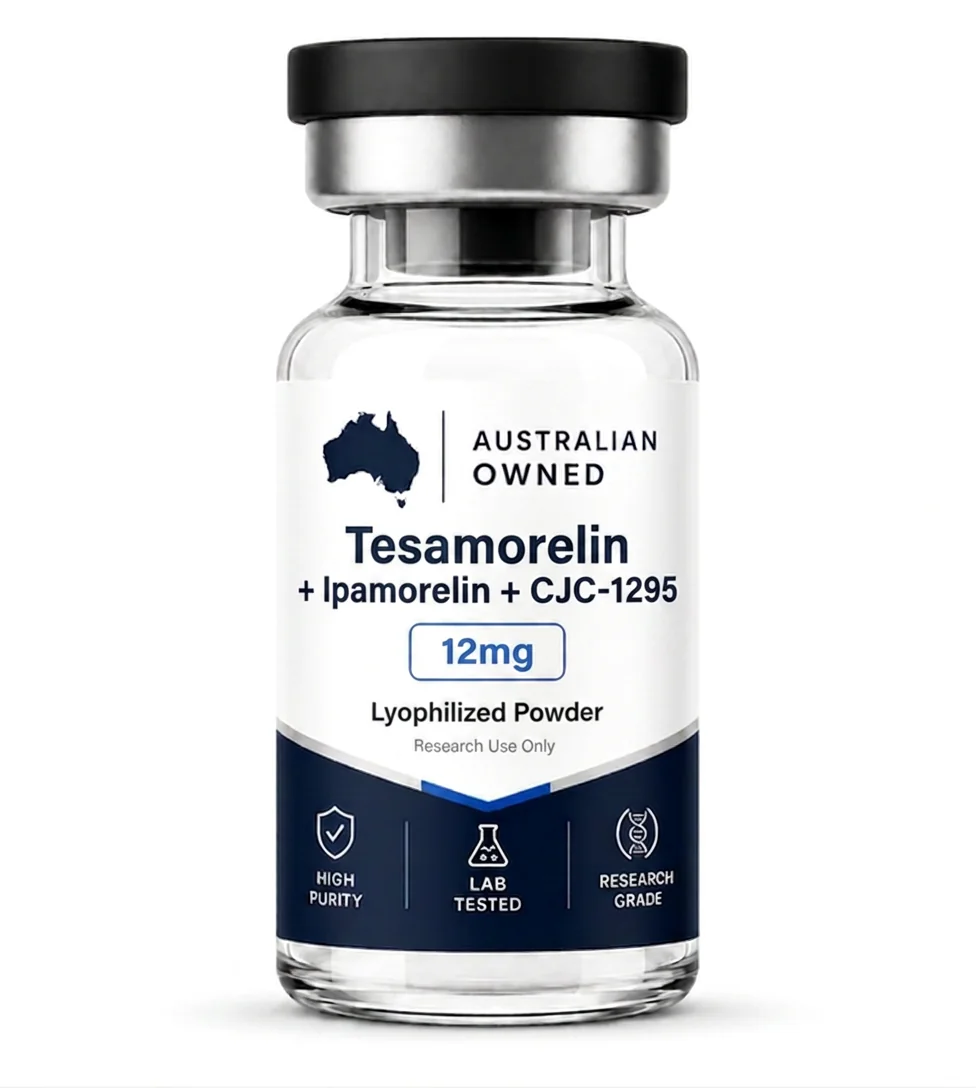
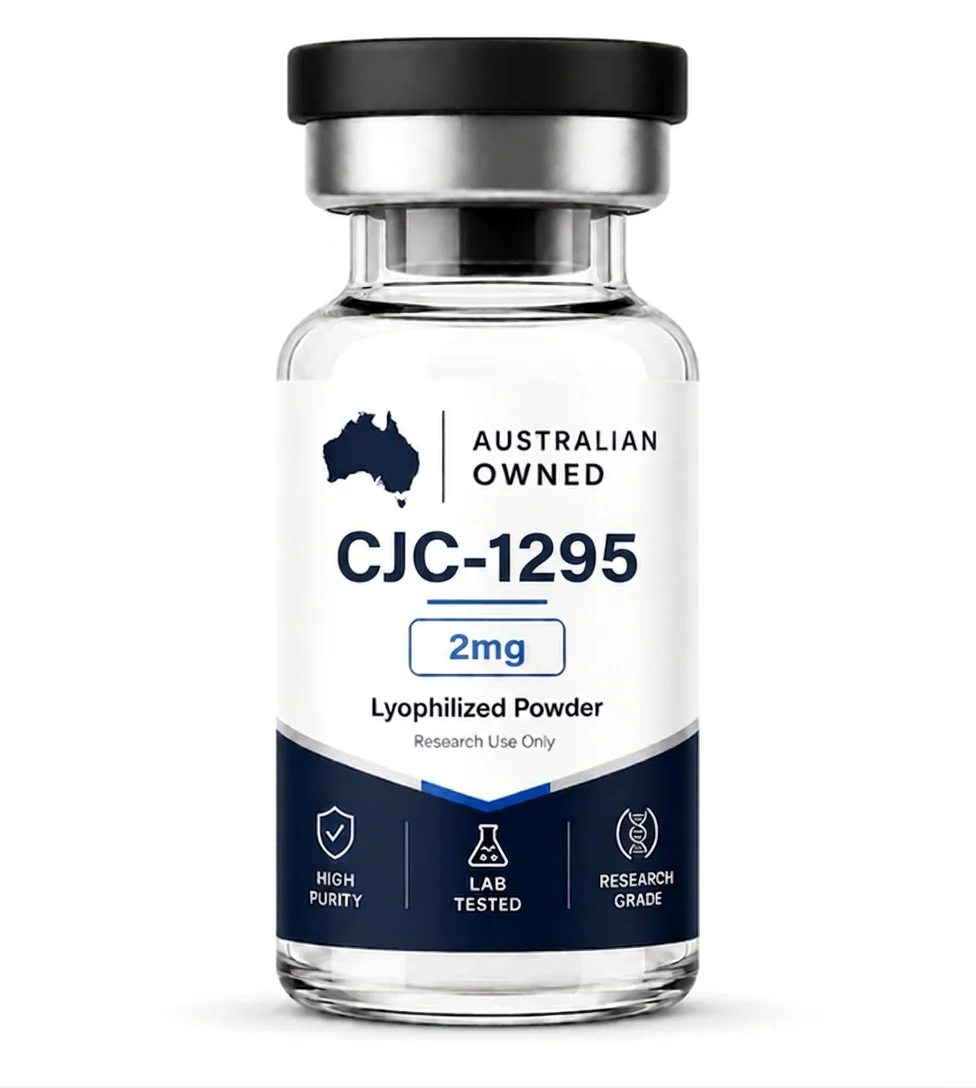
A technical benchmark for Australian scientific investigators working with ipamorelin and CJC-1295, focusing on analytical lot verification, reconstitution best practices, and local supply chain reliability.
The combination commonly identified as ipamorelin cjc-1295 represents one of the most widely referenced dual-peptide configurations in cellular endocrinology literature. This guide explores the scientific rationale behind their co-administration in assays, analytical standards expected by domestic labs, and compliant sourcing pathways via Klow Peptide.
Investigative teams across Australia require reliable, uncompromised peptides to ensure bench experiments remain reproducible. Aligning your project design with documented peer-reviewed pharmacology requires strict verification of compound identity and purity before introducing material into an experimental workflow.
Mechanistic Overview: Dual Pathway Activity in Vitro
In vitro investigations into ipamorelin cjc-1295 focus primarily on the synergistic interplay between growth hormone secretagogue receptor (GHSR-1a) agonism and growth hormone-releasing hormone receptor (GHRHR) stimulation. By evaluating both distinct signaling cascades concurrently, investigators map pulsatile versus sustained cellular secretion pathways.
While broad comparative literature offers useful baseline kinetics, published baseline values cannot offset the risks of variable chemical integrity. Real-world bench consistency relies completely on analytical confirmation specific to the exact batch deployed in your facility.
The Necessity of Independent Lot Authentication
Minor differences in lyophilization conditions, sequence synthesis defects, or post-production storage can introduce purity variations between supplier lots. Reviewing an independent, third-party Certificate of Analysis is the only reliable way to confirm exact peptide sequence, molecular mass, and absence of truncations.
Confirm Batch Integrity Prior to Assays
Inspect contemporary chromatograms and spectrophotometry data for our latest production lots.
Essential Quality Documentation Checklist
| Record Type | Assay Function | Review Stage |
|---|---|---|
| Lot-Specific COA | Validates measured chemical identity and net peptide purity | Prior to vial hydration |
| Analytical HPLC Spectrum | Quantifies chromatographic peak integrity and secondary impurities | Prior to vial hydration |
| Mass Spectrometry (MS) | Corroborates expected theoretical molecular weight profile | Prior to vial hydration |
| Cold-Chain Audit Trail | Monitors environmental conditions from lab synthesis to dispatch | Upon parcel intake |
| Laboratory Reconstitution Sheet | Documents solvent lot, dilution ratios, time stamp, and technician | During sample preparation |
Acquire Research-Grade Ipamorelin & CJC-1295
Domestic Australian inventory featuring full lot transparency and third-party analytical verification.
Standard Laboratory Reconstitution Procedure
- Allow the sealed lyophilized vial and your bacteriostatic diluent to equilibrate to ambient temperature (20–25°C).
- Disinfect the septum surfaces of both containers using sterile 70% isopropyl alcohol wipes and allow to dry.
- Draw the target volume of bacteriostatic water and guide the fluid slowly along the interior glass wall to avoid shear stress.
- Rotate the vial gently between the palms; avoid shaking or vigorous agitation until the lyophilized powder fully dissolves.
- Record the working concentration, operator ID, reconstitution date, and manufacturer lot number on the exterior label.
- Transfer immediately to cold storage (2–8°C) and utilize within the established stability timeframe.
Handling Parameters & Temperature Stability
- Intact Lyophilized Form: Preserve at -20°C in a desiccated environment, shielded from ultraviolet light exposure.
- Hydrated Working Solution: Maintain at 2–8°C using bacteriostatic water; standard in vitro assays utilize solutions within 28 to 42 days.
- Thermal Degradation Prevention: Avoid recurring freeze-thaw cycles; divide into smaller single-use working aliquots if extended freezing is mandated.
Speak with the Klow Peptide Technical Desk
Reach out to our domestic Australian team for analytical documentation, bulk requirements, or order support.
Domestic Australian Fulfillment Standards
Klow Peptide stocks all research compounds domestically across Australia. By fulfilling orders directly from local inventory, we bypass international customs delays, mitigate temperature abuse during transport, and ensure our Australian support team (support@klowpeptide.com.au) is accessible across regular local business hours.
Frequently Asked Research Questions
How can researchers inspect current batch testing for ipamorelin cjc-1295?
All batch-specific documentation is uploaded to our Lab Results section, with corresponding physical documentation provided alongside each dispatch.
What level of chemical purity is required for dispatch at Klow Peptide?
Klow Peptide enforces a minimum purity specification of ≥ 98% via analytical reverse-phase HPLC, with many production batches exceeding 99%.
What is the recommended storage protocol once the vial is hydrated?
Preserve the reconstituted liquid at 2–8°C using sterile bacteriostatic water. Most published stability protocols suggest completing assays within a 28 to 42 day window.
Are historical Certificates of Analysis available for retrospective audits?
Yes. Current batch data remains live on our website, and archived analytical logs for earlier production runs can be requested via support@klowpeptide.com.au.
Can these compounds be purchased for clinical or therapeutic use?
No. Materials provided by Klow Peptide are intended purely for in vitro laboratory experimentation and scientific research within Australia.
How does Klow Peptide ensure quality compared to unverified overseas imports?
We maintain an unbroken chain of custody with Australian-held stock, accompanied by verified HPLC and MS reports traceable down to the individual vial label.
Order High-Purity CJC-1295 & Ipamorelin
Secure Australian-stocked research peptides backed by verified purity profiles and prompt local dispatch.