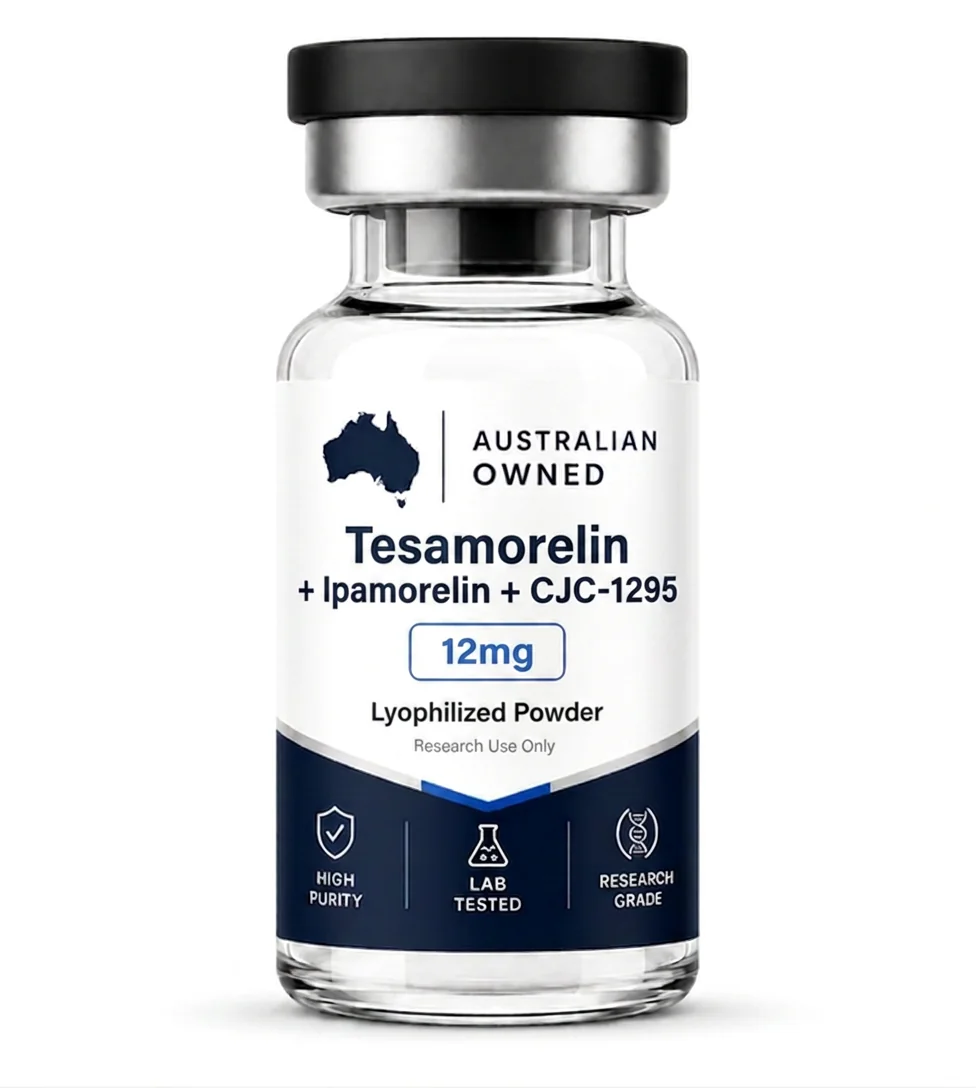
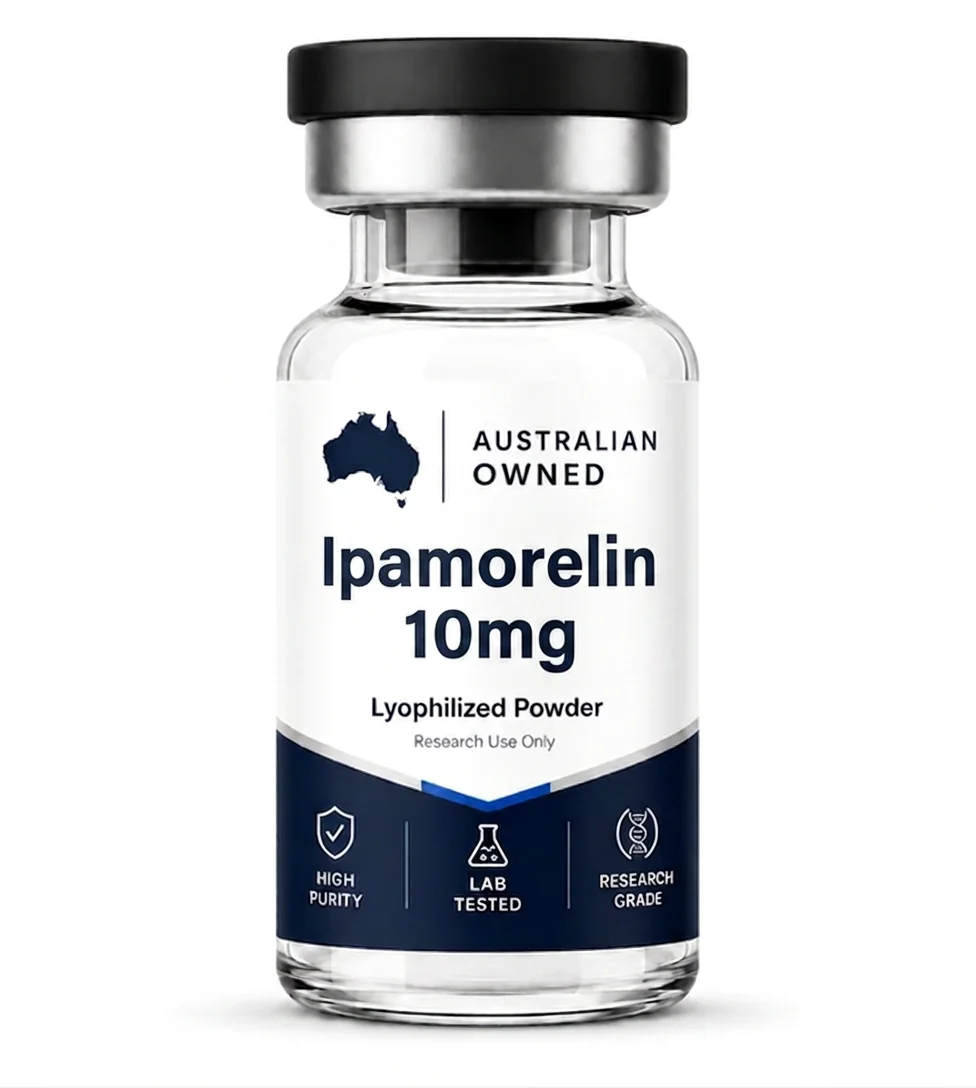
A technical workflow protocol for laboratory personnel working with ipamorelin, covering lot validation, reconstitution best practices, and temperature management.
Ipamorelin is a synthetic pentapeptide recognised as an exceptionally selective secretagogue receptor (GHSR) agonist. Extensive preclinical research demonstrates that it stimulates pulsatile growth hormone release without triggering secondary endocrine fluctuations in baseline ACTH, cortisol, or prolactin levels.
To guarantee analytical integrity and experimental reproducibility in Australian research settings, systematic standard operating procedures must be maintained. Below is an end-to-end laboratory handling protocol spanning intake inspection, batch verification, solubilisation, and inventory closeout.
Protocol Phase 1: Intake & Physical Inspection
- Retrieve shipments promptly upon delivery to prevent excessive thermal exposure, particularly throughout warmer Australian seasons.
- Cross-reference the packaging batch identification against your formal order confirmation and dispatch manifests.
- Perform a non-invasive optical check of the lyophilised ipamorelin pellet, confirming a uniform cake structure free of shrinkage, discoloration, or partial collapse.
- Archive intake photographs of the sealed container, packaging labels, and accompanying documentation within your lab inventory ledger.
Protocol Phase 2: Documentation & Analytical Clearance
Prior to cold-chain placement, authenticate analytical paperwork to eliminate batch discrepancy risks and maintain strict audit compliance across ongoing investigations.
- Audit the vial etching, secondary carton label, and Certificate of Analysis (COA) to ensure complete lot number alignment.
- Confirm that analytical reversed-phase HPLC testing confirms peptide purity meeting or exceeding 98%.
- Validate that electrospray mass spectrometry (ESI-MS) confirms the correct theoretical molecular mass for ipamorelin.
- Digitally catalogue the analytical documentation against internal project reference IDs before releasing the compound to study queues.
Essential Reconstitution & Quality Tools
Utilise our digital dilution tools and download independent third-party analytical certifications.
Protocol Phase 3: Aseptic Reconstitution Procedure
| Sequence | Operational Action | Risk Mitigated |
|---|---|---|
| 1 | Equilibrate lyophilised vial and bacteriostatic water to ambient temperature | Thermal shock and pellet micro-fracturing |
| 2 | Sanitise elastomeric septum surfaces with 70% isopropyl alcohol | Microbial ingress during needle penetration |
| 3 | Direct diluent stream down the internal glass wall at a low dispense rate | Surface tension agitation, foam formation, and structural shear |
| 4 | Gently rotate container horizontally; refrain from vigorous vortexing | Mechanical peptide cleavage and peptide denaturation |
| 5 | Record accurate concentration, date, and operator initials on vial label | Calculation errors and traceability gaps during future sampling |
| 6 | Transfer immediately to controlled refrigeration at 2–8°C | Accelerated hydrolytic breakdown at elevated temperatures |
Secure Research-Grade Ipamorelin
Klow Peptide supplies verified, high-purity ipamorelin synthesised for dependable laboratory assay standards across Australia.
Protocol Phase 4: Cold-Chain Maintenance for Liquid Samples
- Store dissolved compounds consistently between 2°C and 8°C in validated laboratory refrigeration units.
- Design experimental schedules to conclude usage within the verified 28 to 42-day stability window for bacteriostatic solutions.
- Prepare pre-measured single-use aliquots during reconstitution if testing spans several weeks, minimising septum degradation and repeat atmospheric exposure.
- Shield reconstituted vials from direct UV or ambient light exposure using amber storage containers or protective sleeves.
Protocol Phase 5: Usage Documentation & Disposal Auditing
Upon depletion or expiration of the vial, record remaining dead volume, disposal confirmation, and final dates directly into the inventory system. Closing the batch life cycle ensures clean traceability when synchronising comparative assay runs across subsequent procurement cycles.
Protocol Phase 6: Repeat Procurement & Batch Continuity
Sourcing replacement batches through Klow Peptide preserves consistent analytical parameters via domestic dispatch, verified storage, and full batch transparency. If upcoming experimental arms mandate tailored sizing or consolidated lot allocation, contact support@klowpeptide.com.au prior to placing your requisition.
Connect with Klow Peptide Support
Our Australian technical support team provides prompt assistance with documentation requests, inventory inquiries, and priority dispatch.
Laboratory Handling FAQ
Is ambient temperature storage acceptable for lyophilised ipamorelin?
Freeze-dried peptide cakes tolerate short-term ambient transit without degradation. However, institutional inventory should be archived in darkness at -20°C for long-term stability preservation.
What is the recommended working lifespan of reconstituted ipamorelin?
When solubilised using bacteriostatic water and held at 2–8°C, the practical analytical shelf life is generally 28 to 42 days, contingent on aseptic technique and handling frequency.
What action should be taken if a shipment experiences severe thermal exposure in transit?
Take reference photos immediately upon receipt and email support@klowpeptide.com.au within 24 hours. Klow Peptide reviews carrier records and arranges replacement dispatch if thermal thresholds were exceeded.
Can reconstituted peptide solutions be placed into deep freeze?
Repeated freeze-thaw cycles risk aggregate formation and peptide degradation. If freezing is necessary, subdivide into single-use microcentrifuge tubes immediately after solubilisation rather than freezing the primary vial repeatedly.
What is the standard procedure for tracking ongoing aliquots across longitudinal studies?
Document initial reconstitution parameters, final volume, extraction amounts, date stamps, and operator codes in your electronic lab notebook, indexed directly to the master COA.
Where are batch-specific analytical certificates hosted?
Comprehensive HPLC and mass spectrometry reports are catalogued on our Lab Results repository. Physical documentation is also included alongside every Klow Peptide shipment.
Order Analytical-Grade Ipamorelin
Access verified research peptides dispatched directly from Australian facilities with complete analytical documentation.