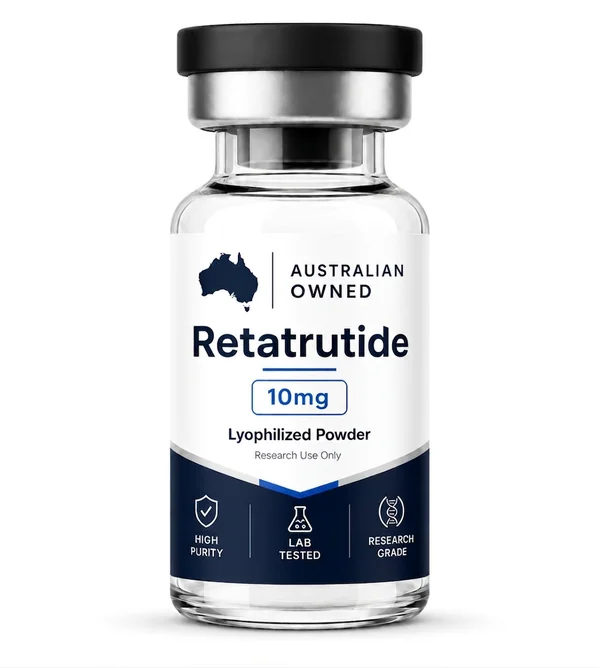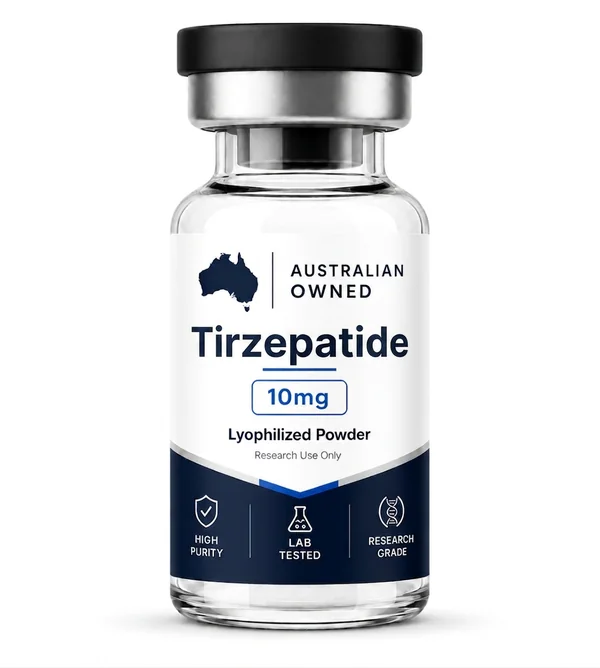
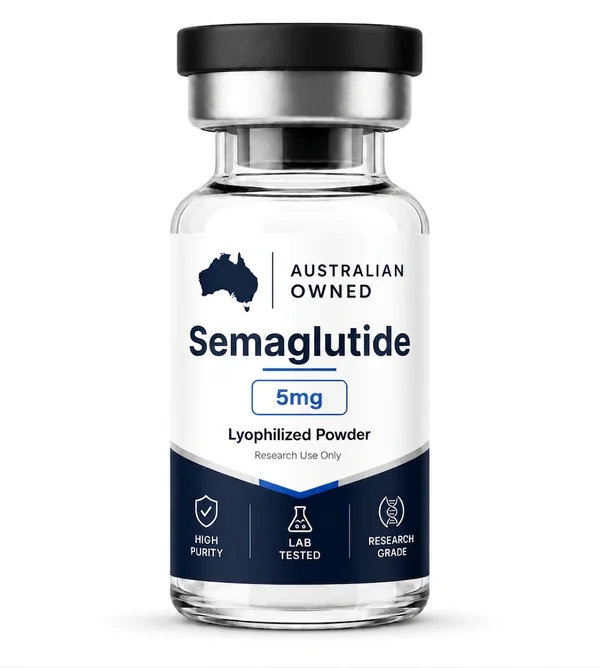
An in-depth reference for Australian researchers investigating semaglutide, covering GLP-1 agonist literature, structural characteristics, handling, and analytical benchmarks.
Engineered as an extended-action GLP-1 receptor agonist, semaglutide represents one of the most thoroughly evaluated synthetic peptides in contemporary laboratory science across Australia. Structurally derived from endogenous human GLP-1, specific amino acid alterations paired with a C18 diacid acyl chain shield the chain from rapid DPP-4 enzymatic degradation and support an extended elimination half-life of roughly seven days in animal models.
Within current peptide literature, semaglutide maintains an essential footprint across metabolic and neuroendocrine investigations. For Australian research personnel drafting experimental methodologies, this guide aligns primary literature observations with the essential quality controls and lot-specific verification needed from domestic scientific vendors.
Molecular Characteristics and Literature Context
Careful review of semaglutide's primary receptor affinity data informs every phase of in vitro and pre-clinical experiment design. Domestic research institutions routinely inspect early structural reports, subsequent elimination kinetics, and documented degradation profiles prior to settling on specific reconstitution buffers or working temperatures.
While comparative research papers contrasting semaglutide against other GLP-1 mimetics provide helpful context, published findings can never stand in for empirical analytical verification of the actual batch sitting in cold storage within your facility.
The Necessity of Lot-Specific Analytical Proof
Unverified chemical batches from disparate suppliers often introduce reproducibility issues stemming from peptide degradation, counter-ion variance, or low purity levels. A comprehensive Certificate of Analysis bridges this operational risk by validating the exact peptide content, molecular mass, and chromatographic purity of the supplied vial.
Calculate Accurate Working Concentrations
Determine exact diluent volumes and microgram-per-unit allocations with our digital tool.
Essential Verification Records for Lab Inventory
| Document | Purpose | When to check |
|---|---|---|
| Lot-Specific COA | Validates actual batch purity levels and confirms peptide identity | Prior to initial dissolution |
| Analytical HPLC Profile | Provides visual verification of purity percentages and secondary peaks | Prior to initial dissolution |
| Mass Spectrometry (MS) | Matches experimental mass-to-charge ratios to expected molecular weight | Prior to initial dissolution |
| Cold-Chain Shipping Audit | Tracks ambient exposure and handling checkpoints from warehouse to lab | Upon parcel arrival |
| Preparation Log Sheet | Records reconstitution date, volume added, diluent lot, and technician initials | During liquid reconstitution |
Source Research-Grade Semaglutide Domestically
High-purity semaglutide held in Australian inventory with transparent multi-point batch verification.
Step-by-Step Reconstitution Guidelines
- Equilibrate the lyophilized peptide vial and bacteriostatic diluent to controlled ambient temperature.
- Sanitise the septum surface on both containers using fresh 70% isopropyl alcohol swabs.
- Draw the specified volume of bacteriostatic water and direct the liquid stream steadily against the glass interior.
- Rotate the container with a slow, circular motion without shaking until the lyophilized matrix fully clarifies.
- Annotate the vial with the final working concentration, date of preparation, lot number, and handler initials.
- Transfer the reconstituted peptide immediately into a laboratory refrigerator maintained at 2–8°C for ongoing trial work.
Optimal Storage Conditions and Sample Longevity
- Lyophilized solid: preserve at -20°C in a desiccated, light-restricted environment within original crimped glassware.
- Liquid solution: refrigerate continuously between 2°C and 8°C, retaining functional integrity typically within a 28 to 42 day experimental window.
- Prevent multiple freeze-thaw events; partition single-use portions directly following primary reconstitution if prolonged storage is required.
Consult the Klow Peptide Technical Desk
Australian researchers can direct analytical, batch verification, and dispatch queries to our regional specialists.
Reliable Australian Fulfillment Standards
Klow Peptide provides an exclusively domestic supply pipeline for scientific laboratories across Australia. All shipments clear locally from domestic inventory, while batch-matched analytical certificates remain freely accessible via our verified results database. Local operations guarantee rapid delivery times and accessible customer support within standard Australian trading hours.
Frequently Asked Questions: Semaglutide Research
How can our lab access the analytical COA for semaglutide?
All batch test documentation is hosted on our Lab Results portal, and a matching verified physical certificate accompanies every delivery dispatched by Klow Peptide.
What purity threshold does Klow Peptide require for semaglutide?
Every production lot distributed to research clients must reach a baseline purity of at least 98% via analytical HPLC, with typical batches exceeding 99%.
What is the recommended storage temperature once reconstituted?
Maintain the dissolved compound under refrigeration between 2°C and 8°C in bacteriostatic water, adhering to standard in vitro experimental protocols of 28 to 42 days.
Can historical or archival lot certificates be requested?
Yes. Current batch reports are open for review online, and past production lot files can be retrieved promptly by reaching out to our support team.
Is semaglutide approved for human clinical use or consumption?
No. Material provided by Klow Peptide is distributed exclusively for laboratory, analytical, and in vitro experimentation by qualified research personnel.
How does Klow Peptide ensure provenance compared to unverified overseas vendors?
We maintain an unbroken audit trail: individual vial serial numbers correlate directly to the container packaging and third-party laboratory reports.
Order Research-Grade Semaglutide Today
Fully authenticated domestic stock with comprehensive HPLC and MS testing documentation.